Work / Case study
Saga: from a conversation to a finished book
An interview becomes an outline, the outline becomes chapters, and the chapters become a book a store will take.
Writing a book with AI assistance usually means a chat window, a lot of copy-paste, and a manuscript that contradicts itself by chapter nine. We built a tool that interviews the author first, builds an outline from what they said, drafts against that outline, and checks each new chapter against everything already written.
The situation
The failure mode is always the same. The early chapters are good, and then the thing doing the writing forgets what it established. A character's eyes change colour, a town moves, a rule of the world is quietly broken. By the time anyone notices, the fix is a rewrite. And because it all happens in a chat window, there is no version of the manuscript anyone can point at as the real one.
What we built
The tool interviews the author before it writes anything, because the material has to come from them. Their answers become an outline they can argue with. Chapters are drafted against that outline, and each one is checked against what has already been established — the people, the places, the rules — so a contradiction is caught while it is still one paragraph. Every version of every chapter is kept and can be compared, so a rewrite is never a leap of faith. When the manuscript is done it exports in the formats a store expects, with a cover sized correctly for the printed page count. Editors get their own access, able to read and comment without being able to regenerate anything underneath the author.
- An interview first, so the material is the author's own
- An outline the author can argue with before any drafting
- Every new chapter checked against what is already established
- Full version history per chapter, with comparison
- Export in the formats stores expect
- Covers sized correctly for the finished page count
- Separate editor access: read and comment, never regenerate
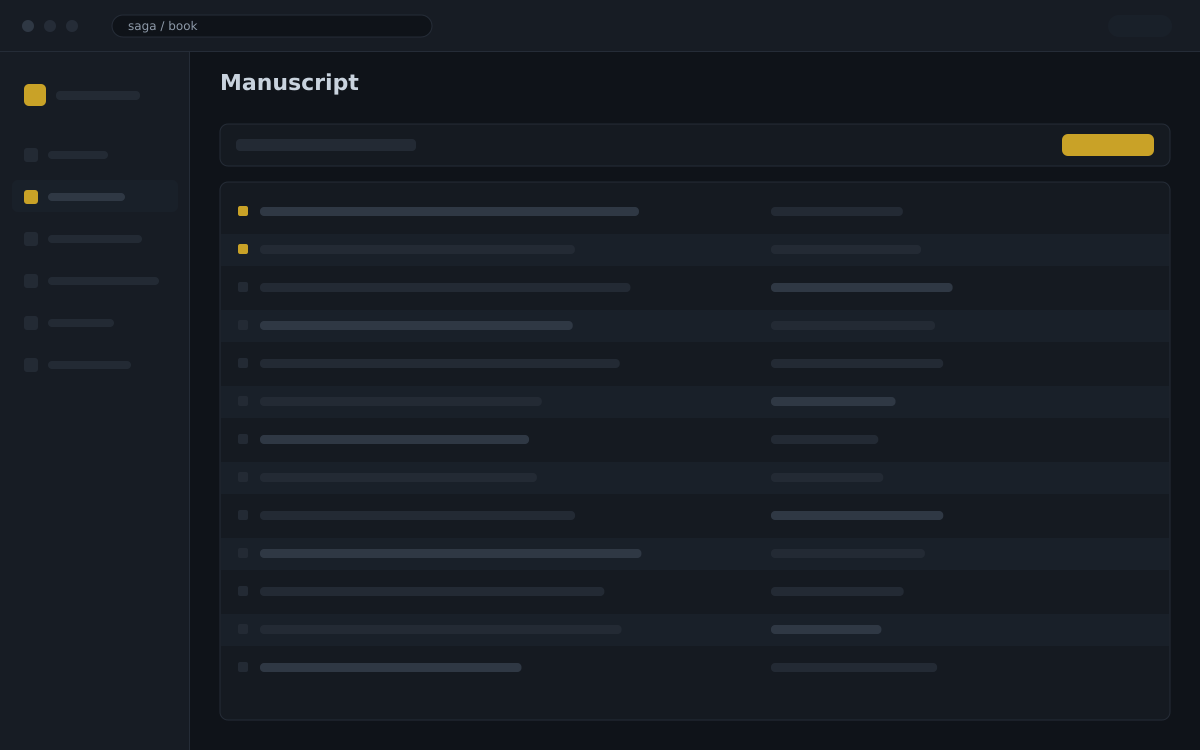
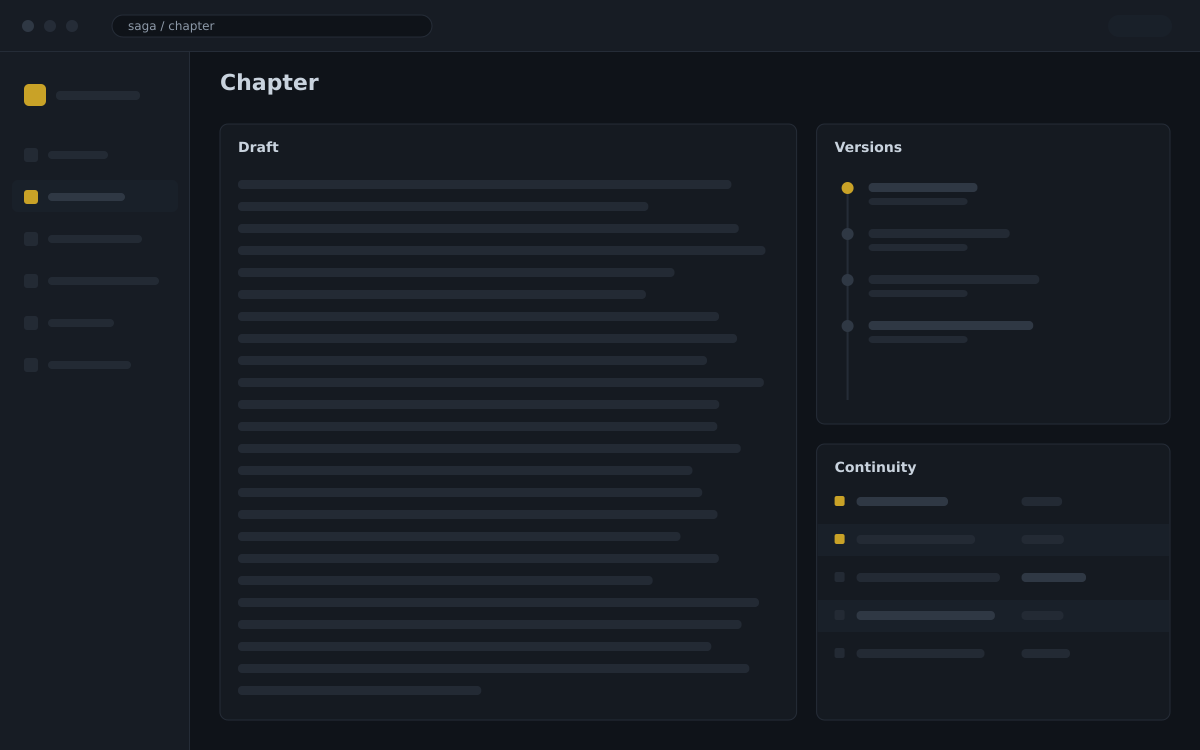
Interface illustrations. Abstracted representations with placeholder content — never client data.
What changed
The book stays consistent with itself, which is the whole job. The author always has a current manuscript rather than a chat history, and the finished thing is in a format a store will accept without a fight.
Ready for the store, not for a converter
Something similar on your desk?
Tell us about it. The interview takes about ten minutes and you will hear back from one of the two of us.