Work / Case study
ReadyGuidance: a publishing pipeline that refuses to publish something broken
The rules stopped being instructions the machine might follow and became checks it cannot get past.
A content operation was driven by one long instruction handed to an AI agent. The rules were words, so they were followed well on a good day and badly on a bad one. We rebuilt it so the model writes prose and nothing else, and every rule that used to be a sentence is now a check in code that an article has to pass before it can publish.
The situation
Everything the operation cared about lived in one long instruction: do not repeat a topic we have covered, only recommend products that are actually available, make sure the images exist, hit the length, get the links right. An instruction is a request. Some days it was honoured and some days it was not, and the failures were found by readers rather than by anyone on the inside. Worse, nobody could tell in advance which kind of day it was.
What we built
We split the job in two. The model writes prose — that is the part it is genuinely good at — and has no say over anything else. Every other rule became a gate: the topic is checked against everything already published, products are confirmed to exist and be available before a writer ever sees them, images are confirmed present as files, length and readability are measured, links are verified, and the whole site is built to prove nothing broke. An article that fails any gate does not publish. It is held for a person, with the reason attached. Nothing is left to how well an instruction landed that day.
- The model writes prose only; every rule is enforced in code
- Topics checked against everything already published
- Products confirmed available before they reach a writer
- Images confirmed to exist as files, not merely referenced
- Length, readability and link correctness measured, not assumed
- A failing article is held with its reason, never quietly published
- Review queue with one-click approve for anything borderline
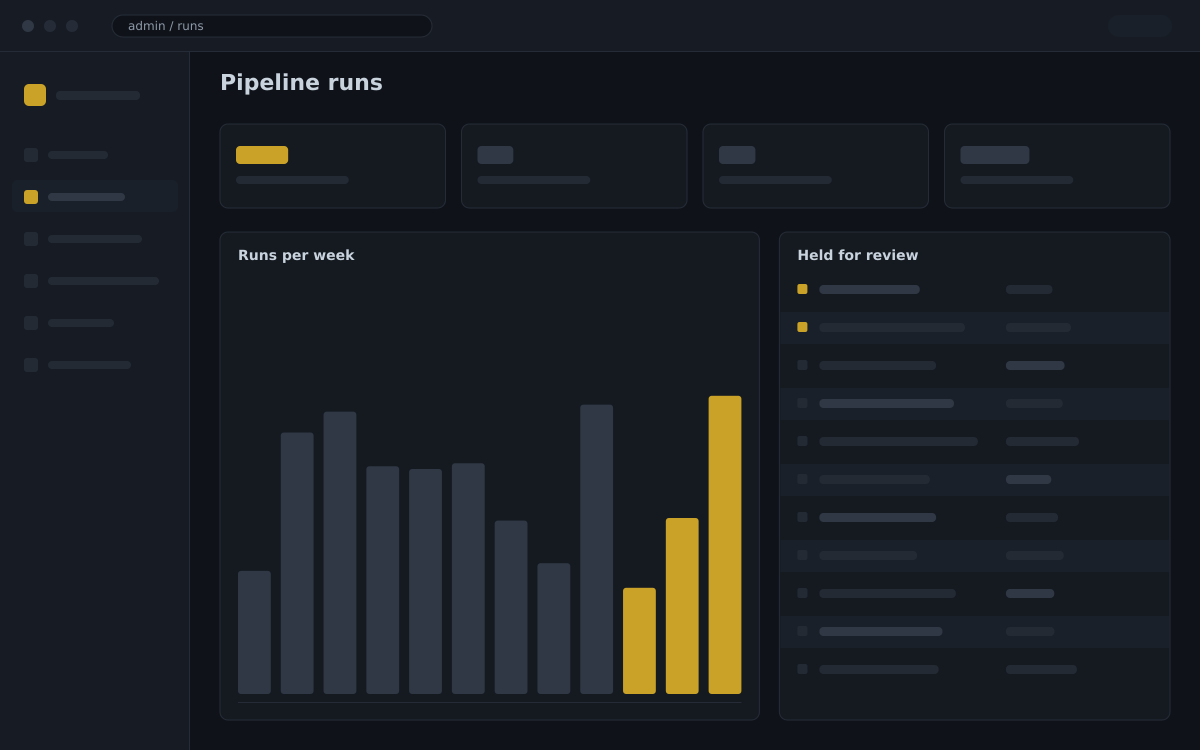
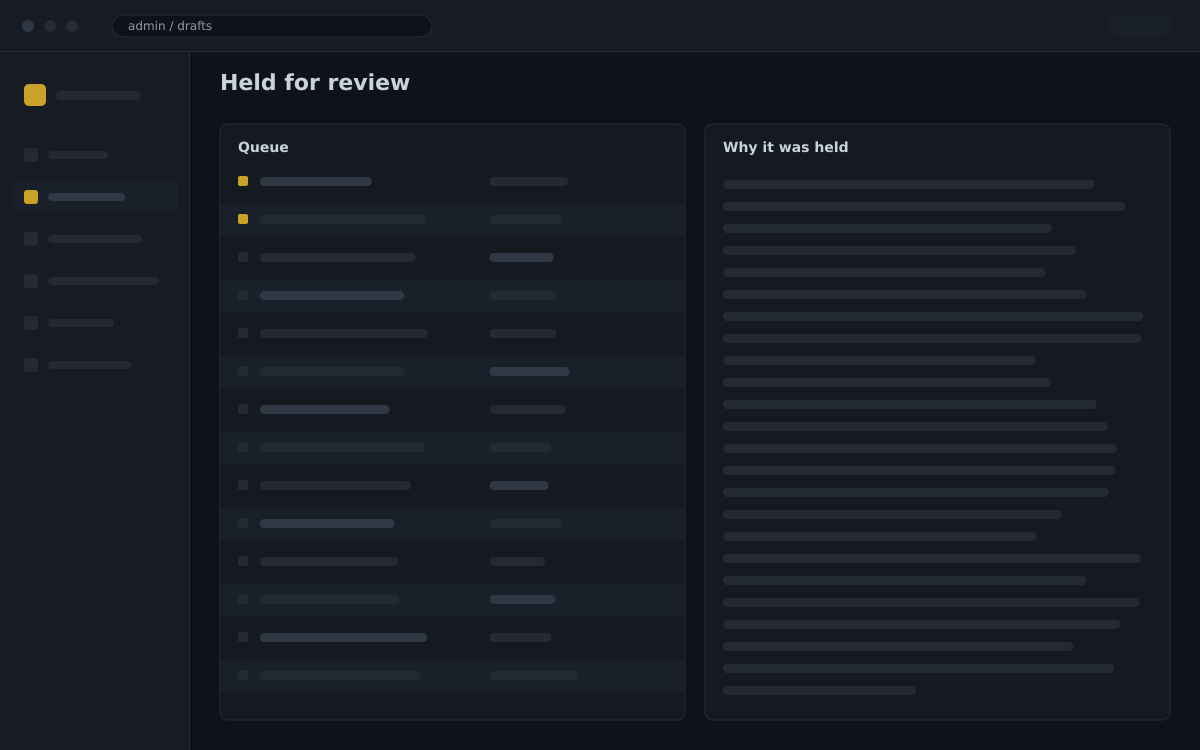
Interface illustrations. Abstracted representations with placeholder content — never client data.
What changed
Quality became a property of the pipeline instead of a property of the day. The failures that used to reach readers now stop at a gate with an explanation, and the operation runs on its own schedule without anyone watching it.
All of them blocking, none advisory
Failing a gate holds the piece for a person
Something similar on your desk?
Tell us about it. The interview takes about ten minutes and you will hear back from one of the two of us.