Work / Case study
A meal planner that learns what the household actually eats
Plan, cook, rate — and next week's plan is measurably better than last week's.
Meal planning apps fail the same way: they suggest food nobody in the house likes, and they have no idea what is in the cupboard. We built one around a loop instead — plan it, cook it, mark what got used, say what you thought — so that each week's plan is informed by every week before it.
The situation
A weekly plan is easy to generate and hard to make useful. It has to know who is eating, what they will actually eat, what is already in the house, and what was tried last month and quietly never repeated. Without that it produces a plausible list that gets ignored by Wednesday, and the household goes back to deciding at six o'clock.
What we built
The app is built around the loop, not the plan. You plan the week, you cook something and mark it cooked, the ingredients come out of the pantry count automatically, and everyone says what they thought. That last step is the one that matters: the ratings tune what gets suggested next, per person, so a meal two people love and one person tolerates shows up at the right frequency instead of never or every week. Recipes can be brought in from anywhere and are cleaned up into the same structure on the way in, so the book stays consistent. Nutrition comes from a real reference rather than a guess, and can always be corrected by hand.
- Weekly plan built around who is actually eating
- Pantry counts that deplete as meals are cooked
- Per-person taste profiles that tune future suggestions
- Recipes imported from anywhere and normalised on the way in
- Nutrition from a real reference, always hand-correctable
- Private and self-hosted — the household's data stays the household's
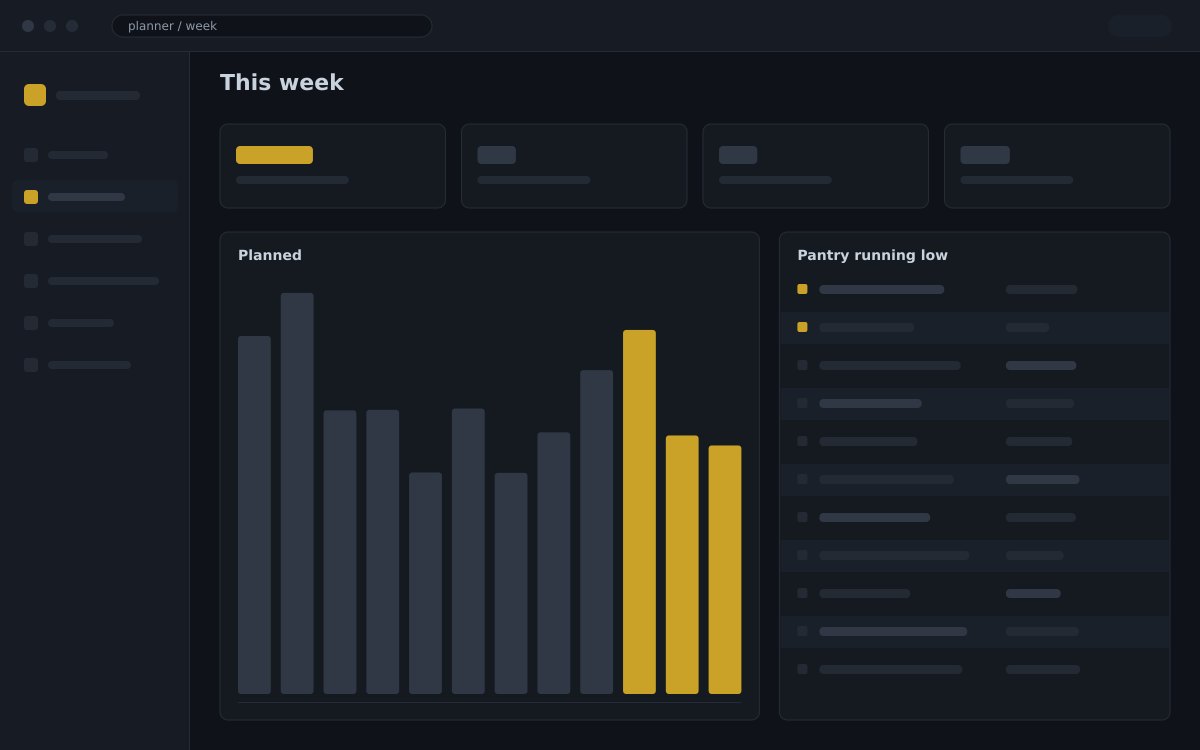
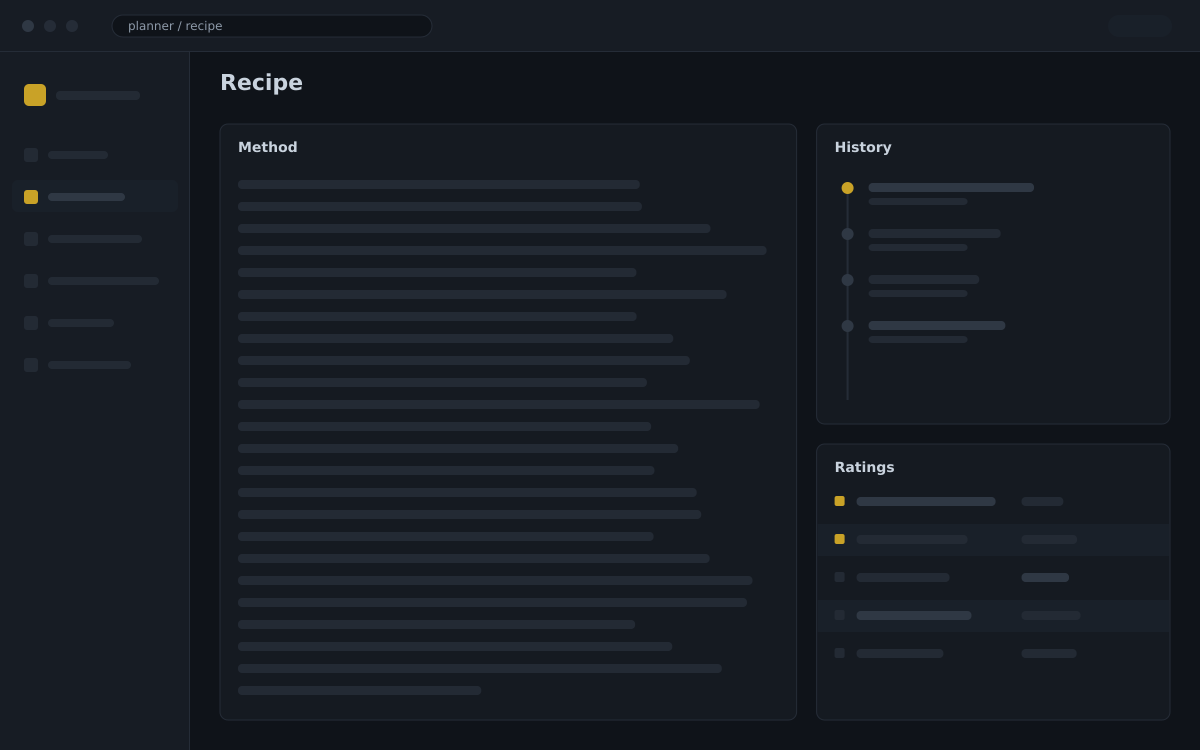
Interface illustrations. Abstracted representations with placeholder content — never client data.
What changed
The plan is used because it reflects the actual household. The cupboard count is right because it is maintained by cooking rather than by an inventory chore, and the suggestions get better on their own.
Something similar on your desk?
Tell us about it. The interview takes about ten minutes and you will hear back from one of the two of us.